Documents of the Harlem Renaissance
Item
-
Title
-
Documents of the Harlem Renaissance
-
This edition
-
"Documents of the Harlem Renaissance". Ed. Thomas J. Davis and Brenda M. Brock. Santa Barbara, CA: ABC-CLIO, 2021. 288 pp.
-
Table of contents
-
● Preface
● Evaluating and Interpreting Primary Documents
● Introduction
● Chronology
Chapter 1 The New Negro Mecca: Harlem
● Alain Locke / "Harlem" (1925)
● Eric Walrond / "The Black City" (1924)
● James Weldon Johnson / "The Making of Harlem" (1925)
● Rudolph Fisher / "The City of Refuge" (1925)
● Wallace Thurman / "Harlem's Nightlife" (1927)
● Dorothy West / "Amateur Night in Harlem: 'That's Why Darkies Were Born'?" (1938)
● Langston Hughes / "When Harlem Was in Vogue" (1940)
Chapter 2 The New Negro: A New Time, A New People
● James Weldon Johnson / "Lift Every Voice and Sing" (1900)
● Booker T. Washington, et al. / "A New Negro for a New Century" (1900)
● W. E. B. Du Bois / "The Souls of Black Folk" (1903)
● W. E. B. Du Bois / "Possibilities of the Negro: The Advance Guard of the Race" (1903)
● Charles S. Johnson / "Public Opinion and the Negro" (1923)
● Eric Walrond / "The New Negro Faces America" (1923)
● Alain Locke / "Enter the New Negro" (1925)
● J. A. Rogers / "Who Is the New Negro, and Why?" (1927)
Chapter 3 The New Negro at War
● Charles F. White / "Plea of the Negro Soldier" (1907)
● Archibald H. Grimké / "Her Thirteen Black Soldiers" (1917)
● W. E. B. Du Bois / "Close Ranks" (1918)
● William Monroe Trotter / "Du Bois, One-Time Radical Leader Deserts and Betrays Cause of His Race" (1918)
● Florence Lewis Bentley / "A Negro Woman to Her Adopted Soldier Boy" (1918)
● Emmett J. Scott / "The American Negro in the World War" (1919)
● W. E. B. Du Bois / "Returning Soldiers" (1919)
● Langston Hughes / "The Colored Soldier" (1919)
● Florence Lewis Bentley / "Two Americans" (1921)
● Carrie Williams Clifford / "The Black Draftee from Dixie" (1922)
Chapter 4 The New Negro on the Move
● Anon. / "Bound for the Promised Land" "Chicago Defender" (1916)
● Anon. / "Is Migration a Panacea?" "Cleveland Advocate" (1920)
● Charles S. Johnson / "How Much Is the Migration a Flight from Persecution?" (1923)
● Jean Toomer / "Cotton Song" (1923)
● Ariel Williams / "Northboun'" (1927)
● Arna Bontemps / "A Summer Tragedy" (1933)
Chapter 5 The New Negro under Attack
● Paul Laurence Dunbar / "The Lynching of Jube Benson" (1904)
● Charles F. White / "The South's Ungolden Rule" (1907)
● Ida B. Wells-Barnett / "Lynching: Our National Crime" (1909)
● NAACP / "The Massacre in East St. Louis" (1917)
● Walter F. White / "Chicago and Its Eight Reasons" (1919)
● Walter F. White / "The Eruption of Tulsa" (1921)
● Claude McKay / "The Lynching" (1922)
● Kelly Miller / "The Harvest of Race Prejudice" (1925)
● Langston Hughes / "Scottsboro" (1931)
Chapter 6 The New Negro Self Vision
● W. A. Domingo / "If We Must Die" (1919)
● Claude McKay / "If We Must Die" (1919)
● Langston Hughes / "The Negro Speaks of Rivers" (1921)
● Marcus Garvey / "I Am a Negro" (1923)
● Eric Walrond / "Vignettes of the Dusk" (1924)
● Countee Cullen / "Heritage: What Is Africa to Me?" (1925)
● Kelly Miller / "The New Negro College and the Negro Renaissance" (1926)
● Loren R. Miller / "College" (1927)
● Susie Wiseman Yergan / "Africa—Our Challenge" (1930)
Chapter 7 The New Negro Woman
● Fannie Barrier Williams / "The Colored Woman and Her Part in Race Regeneration" (1900)
● Georgia Douglas Johnson / "The Heart of a Woman" (1918)
● Carita Owens Collins / "This Must Not Be" (1919)
● 'A Southern Colored Woman' / "A Letter to the Editor" (1919)
● Marita Bonner / "On Being Young—A Woman—and Colored" (1925)
● Nella Larsen / "Passing" (1929)
Chapter 8 The New Negro Children
● W. E. B. Du Bois / "The True Brownies" (1919)
● Jessie Redmon Fauset / "Emmy" (1912)
● Minnibelle Jones / "The Fairy Good Willa" (1914)
● Carry S. Bond / "A Fairy Story" (1919)
● A. T. Kilpatrick / "GYP: A Fairy Story" (1921)
● Jessie Redmon Fauset / "The Judge" (1921)
● Zora Neale Hurston / "Drenched in Light"(1924)
● Gwendolyn B. Bennett / "To a Dark Girl" (1927)
Chapter 9 The New Negro Aesthetics
● Willis Richardson / "The Hope of the Negro Drama" (1919)
● Mary White Ovington / "Negro Art" (1921)
● Arthur A. Schomburg / "The Negro Digs Up His Past" (1925)
● W. E. B. Du Bois / "Criteria of Negro Art" (1926)
● Alain Locke / "Art or Propaganda?" (1928)
● Anon. / "A Brown Aesthete Speaks" (1928)
● Romare Bearden / "The Negro Artist and Modern Art" (1934)
● The New Negro Afterward: Conclusion
● Bibliography
● Index
-
About the anthology
-
● Collects 70 texts from the Harlem Renaissance context.
-
● Named in the 2021 Best Historical Materials List of the Reference and User Services Association (RUSA), History Section.
-
RUSA (Reference and User Services Association)
-
Publisher's description
-
● "This book explores the transformative energy and excitement that African Americans expressed in aesthetic and civic currents that percolated during the opening of the 20th century and proved to be a force in the modernization of America.
"This engaging reference text represents the voices of the era in poetry and prose, in full or excerpted from anecdotes, editorials, essays, manifestoes, orations, and reminiscences, with appearances by major figures and often overlooked contributors to the Harlem Renaissance.
"Organized topically and, within topics, chronologically, the volume reaches beyond the typical representation of the spirit and substance of the movement, examinations of which are typically confined to the New York City community and from U.S. entry into World War I in 1917 to the depths of the Great Depression in 1935. It carries readers from the opening of the Harlem Renaissance, which began at the top of the 20th century, to its heights in the 1920s and '30s and through to its artistic and literary echoes in the shadows of World War II (1939–1945)."
-
Item Number
-
A0620
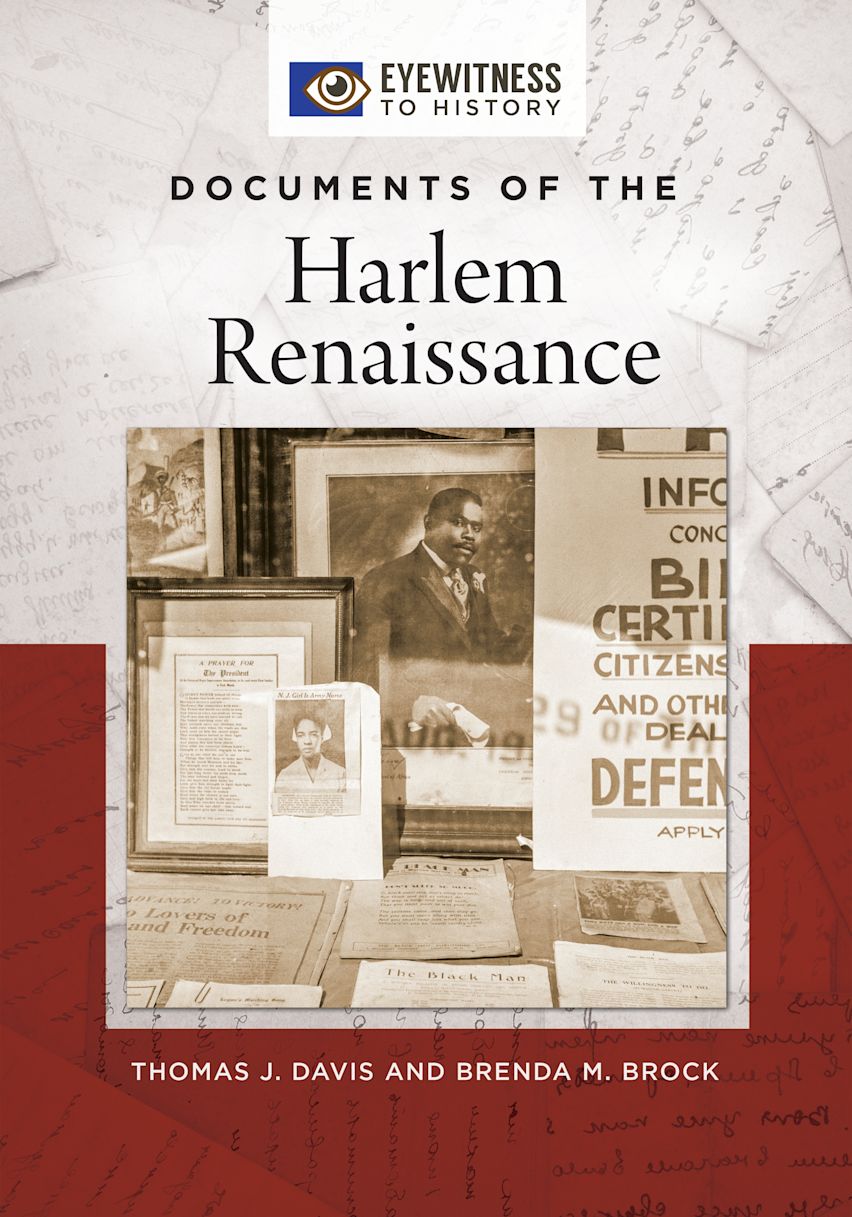
 Front cover