Antioxidants and their Uses
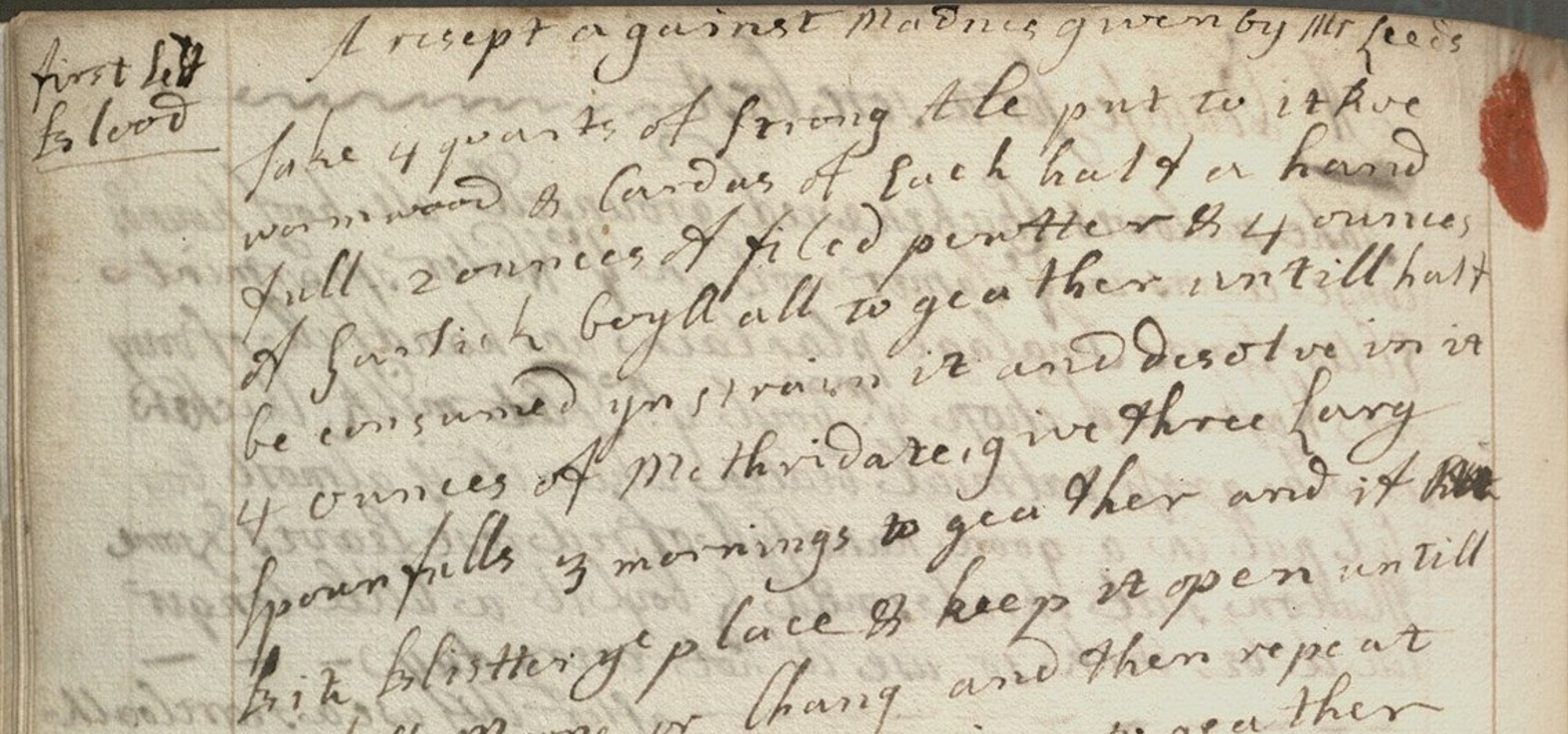
The Fairfax-Spencer Recipe Book contains numerous family recipes that were in use from 1694-1795. It contains quite a few recipes, ranging from food to beverages to medicinal content. Interestingly, studies support that these medicinal recipes do contain health benefits through their herbs and spices.
What are these various plants and herbs actually doing to people when used as remedies? Is there any true medicinal value in them? Studies have shown that people who eat food with more spices are less likely to develop cancer, heart diseases, and respiratory diseases (Jiang, 2019). So what could make these spices so beneficial to their health? Several of the spices found in the recipe book are what are known as “antioxidants”, which prevent a lot of different diseases and conditions. These have been shown to help people reduce the amount of oxidative stress in the body (Charles, 2013, pg. 3). Oxidative stress is where there is an imbalance of oxygen in cells (including DNA), which can cause damage long-term.
Antioxidants help prevent things such as chronic inflammation, heart disease, arthritis, cancer, diabetes, cardiovascular disease, and neurological disorders. Many of these antioxidants are anti-inflammatories, so they can also affect mood and cognition (Jiang, 2019). Antioxidants can be used to preserve foods for longer periods of time, given that oxidation is what causes them to decay. After World War II, synthetic antioxidants were used more often in foodstuffs, to get more consistent (and cheaper) results (Charles, 2013, pg. 5).
Neurodegenerative diseases (such as Alzheimer's, Parkinson’s, and Huntington’s diseases) can also be magnified by oxidative stress. This oxidative stress is present in the development of the disease, and later magnifies the cellular damage in the brain (Jamal et al., 2024, pg. 21). Many of these diseases can also be exacerbated by chronic inflammation, to which a contributing factor is oxidative stress. Tests have been done on rats and mice to see whether antioxidants in their diets would help improve cognition and delay these diseases, displaying promising results. Numerous antioxidants also show antiviral properties, which can be used to fight viruses and infections, including CoVid-19 (Chen, 2025, pg. 57-58). These antiviral herbs and spices work by blocking the replication of the disease, stopping it from absorbing within the body, and preventing it from getting into the body in the first place.
Most of the medicinal remedies in the recipe book have antioxidants, which are used to help treat or heal injuries. Different antioxidants are used to treat different things, and have varying protective or healing effects. The antioxidant properties may not help directly with the issue that the recipe book would like it to tackle, but many of them have important properties nonetheless. Here are some examples of recipes with various antioxidants, and their uses - whether they are related to the illness or not. Please note many of these herbs and spices could have detrimental side effects in certain circumstances, so consult a medical professional as to the benefits and harms when used.
The "Mrs. Listers Purging Drink for the Kings Evell” (Tuberculosis) recipe has coriander, cardamom, fennel, and liquorice, where:
- Coriander (whose leaves are cilantro) is also an antibacterial herb. It can be used to treat skin infections, lower cholesterol, and has a cardioprotective effect. It has been shown to help patients suffering from Alzheimer's, is used to treat dyspepsia, and to aid digestive and urinary problems (Charles, 2013, pg. 259-260). It has shown antimicrobial properties against E. Coli and other such diseases (Scandar et al., 2023).
- Fennel is recommended for diabetes, bronchitis, and can be used for skin (and eye) diseases. It has also been used to treat coughs and flatulence (Charles, 2013, pg. 290-291).
- Liquorice is an antitumor and antiparasitic, in addition to being an antioxidant. It has been shown to help with ulcers, acting against bacteria and fungi. It has also been used to treat arthritis. It can also help with bad breath, but is dangerous for the heart if there is too much (Chen, 2025, pg. 277).
- Cardamom aids with reducing blood pressure, and has even been shown to relieve anxiety and depression symptoms in rats (Jamal et al., 2024, pg. 144-145). It also has the potential to reduce the risk for cancer (Bano et al., 2024).
The aid for the "For the Green Sicknes [sickness]" has anise seeds, pepper, and nutmeg:
- Nutmeg can settle a stomach, and has been tested in rats to help with epilepsy and seizures (Jamal et al., 2024, pg. 145-146). It can also aid with joint pains from arthritis and rheumatism, and prevents certain cancers (Charles, 2013, pg. 430-432). It can even be used to help repel mosquitoes (Wong et al., 2025).
- Pepper can help fight many viruses, often also aiding their symptoms (Chen, 2025, pg. 105). It raises body temperature and fights nausea, as well as helping digestion (Charles, 2013, pg. 463-464).
- Anise can be used to aid digestion, stop hiccups, decrease cramps, induce sleep, and has recently been tested with rats to aid gastro-intestinal issues (Charles, 2013, pg. 162-163).
The recipe for "An Excelent Resept for the worms in children" has dried spearmint as one of the ingredients, which is often used for digestive issues, and has antibacterial properties (Charles, 2013, pg. 539-541). It can also slow the growth of cancer in the body.
Sage is used in the recipe book to treat "To wash any foul or Dead sore". It may have been useful in this treatment because of its antifungal and antibacterial properties, but it also aids in digestion (and prevents diarrhea) (Charles, 2013, pg. 524-526). It can also be used to help with menstruation and menopause, as it contains estrogen, while also aiding the various symptoms of Alzheimer's.
Onion is another great resource used in the "for a pain in the Ear" section. It can be used to help with insect stings, and helps blood flow (Charles, 2013, pg. 438-442). It can even help with toothaches, infections, and to minimize scarring.
Angelica and Saffron are both used in the "To make the Read[text loss] the Ducheys of Buckingham way" recipe, which is used for a multitude of illnesses, where:
- Angelica can be used for different digestive and chest problems, as well as protecting the liver and colon (Charles, 2013, pg. 153-155). It has also shown that it can be effective in protecting neurons from the effects of Alzheimer's, as well as helping with minor headaches and migraines (Jamal et al., 2024, pg. 64-70). It can also be used with menopause and acne (Batiha et al., 2022).
- Saffron can be used as an antidepressant, and has been used to help stress, insomnia, and memory (Charles, 2013, pg. 512-516). It has even shown antitumor properties, making it useful in treating cancer. It has been used to treat burns and other small injuries as well.
Garlic (and nutmeg, see above) is used in the recipe book to treat "For the Gravill [illegible] Spencer’s Resept" (kidney stones), which lowers cholesterol and blood pressure, and has been shown as an antibiotic and an antimicrobial (Charles, 2013, pg. 308-317). It has even been shown to reduce joint pain and lowers the risk for heart disease (Jiang, 2019).
The treatment for "Mr Gregorys resept of an Ague" (malaria) has bay leaves in it, which is an antimicrobial in addition to being an antioxidant (Charles, 2013, pg. 184-185). It has been shown to have gastroprotective properties in rats, and can even help with type II diabetes and conditions such as heart attacks and strokes.
The treatment for "For the jaundice Cousen Garlend" includes turmeric (and saffron, see above), which protects the lining of the stomach and colon as well as aiding with arthritic pain (Jiang, 2019). It has also been tested on rats to aid in conditions such as diabetes and psychiatric care. It can even help prevent and treat cancers and heart conditions. Turmeric prevents viruses from replicating and prevents infection as well (Chen, 2025, pg. 108).
A treatment of "A Docter [text loss] Medisin [text loss]" has both smallage and juniper (as well as fennel and licorice, see above), which are both antioxidants.
- Smallage, or celery seed is very effective against bronchitis, asthma, and psychiatric conditions, including epilepsy (Charles, 2013, pg. 216-217). It is also used as a mosquito repellant.
- Juniper is known to fight many bacterias and yeasts (Charles, 2013, pg. 359-360). It also has a neuroprotective effect, and has been tested in rats as an antidiabetic (Raina et al., 2019). It can be used as a mosquito and tick repellant.
There are more medicinal and food recipes that have incredible amounts of antioxidants in them; These are only a few. There are other groups of herbs and spices that also have medicinal value, such as antivirals, antimicrobials, or antibiotics, of which several are represented in the recipe book, and in modern foods. Spices and herbs are beneficial and easily accessible to most people. Foods, herbs, and spices can be used as medicine, and can keep people healthy.
Written by E. G. R. Horner (2026)
References
Bano, S., Majumder, A., Srivastava, A., & Nayak, K. B. (2024). Deciphering the Potentials of Cardamom in Cancer Prevention and Therapy: From Kitchen to Clinic. Biomolecules, 14(9), 1166. https://doi.org/10.3390/biom14091166
Batiha, G. E., Shaheen, H. M., Elhawary, E. A., Mostafa, N. M., Eldahshan, O. A., & Sabatier, J. M. (2022). Phytochemical Constituents, Folk Medicinal Uses, and Biological Activities of Genus Angelica: A Review. Molecules (Basel, Switzerland), 28(1), 267. https://doi.org/10.3390/molecules28010267
Charles, D. J. (2013). Antioxidant properties of spices, herbs and other sources (1st ed. 2013.). Springer. https://doi.org/10.1007/978-1-4614-4310-0
Chen, J.-T. (Ed.). (2025). Traditional and herbal medicines for COVID-19 (First edition.). CRC Press. https://doi.org/10.1201/9781003452621
Jamal, A., Sarwat, M., & Bashir, F. (2024). Medicinal Plants for the Management of Neurodegenerative Diseases. (1st ed.). Taylor & Francis Group. https://doi.org/10.1201/9781003392941
Jiang, T. A. (2019). Health Benefits of Culinary Herbs and Spices. Journal of AOAC International, 102(2), 395–411. https://doi.org/10.5740/jaoacint.18-0418
Raina, R., Verma, P. K., Peshin, R., & Kour, H. (2019). Potential of Juniperus communis L as a nutraceutical in human and veterinary medicine. Heliyon, 5(8), e02376. https://doi.org/10.1016/j.heliyon.2019.e02376
Scandar, S., Zadra, C., & Marcotullio, M. C. (2023). Coriander (Coriandrum sativum) Polyphenols and Their Nutraceutical Value against Obesity and Metabolic Syndrome. Molecules (Basel, Switzerland), 28(10), 4187. https://doi.org/10.3390/molecules28104187
Wong, X. K., Alasalvar, C., Bo, S., Pan, J., & Chang, S. K. (2025). Unlocking the power of nutmeg: Nutritional composition, phytochemicals, and health benefits revealed through chemometrics and multi-omics advances. Food research international (Ottawa, Ont.), 218, 116798. https://doi.org/10.1016/j.foodres.2025.116798